
Author Archives: Vikram Murarka

Vikram Murarka

About Vikram Murarka

Chief Currency Strategist at KSHITIJ.COM. Likes to look at the markets from many different angles. Weaves many conventional and unconventional technical analysis techniques and fundamental analysis into a global macro perspective. Likes to take the road less traveled.

The Great Centrality

The Great Centrality

The Great Centrality

Just as health sits at the center of everything we pursue, FX risk management sits at the center of a company’s financial outcomes.

    • Imports and exports
    • Costing
    • Volatility
    • Profitability

Each of these moves together. Ignore one, and the balance breaks.

At Kshitij, we view FX risk management as a core function, not a side activity. When it’s structured well, it supports better pricing, smoother cash flows, and more predictable profits.

Get the center right, and everything else aligns.


#Kshitij #FX #CurrencyRisk #RiskManagement #Hedging #Treasury #Markets

Dollar-Rupee

India’s Forex Policy – beyond just the exchange rate

Dollar-Rupee

Quiz question: Which was the last Indian crisis that led to sharp Rupee weakness?
Answer: The BOP crisis, back in 1991.


Rupee depreciation not home-grown

Surprised? After the BOP crisis of 1991 (which had led to devaluation of the Rupee), there has been no crisis originating in India, that has impacted the country’s external sector to an extent that would lead to Rupee weakness.

Yet the Rupee has depreciated 492% since Rs 13/$ in 1991 to Rs 76.98/$ in 2022. How come? There have indeed been a series of crises that have contributed to Rupee’s weakness, but they have all originated overseas: the Asian Crisis (1997), the Russian debt default and the LTCM meltdown (1998), Y2K (2000), the 9/11 attack (2001), the GFC (2008), European Crisis (2011), Taper Tantrum (2013), Covid-19 (2020) and the Russia-Ukraine War (2022).

During this period, Bharat’s economy has continued to grow, per capita income in $ terms has grown (despite the Rupee’s weakness),  structural improvements have happened in the economy, the stock market has boomed,  and most importantly, improvements have been made on several human development indices. Most recently, the IMF has commended India in pushing back against extreme poverty even during the pandemic years. We would have to be extremely churlish to say that overall our country is in a worse place than it was in 1991, when we had to ignominiously pawn our gold overseas.

Incongruously, however, the Rupee is in a much worse position than it was in 1991. Why? Two explanations are commonly, almost axiomatically, offered by the cognoscenti. One, we have a chronic Balance of Trade deficit. Therefore, QED. Two, we are an emerging market currency and all emerging market currencies have got the short end of the stick during all international crises. What’s the big deal? QED.

It is almost as if the question “Why” is to be given a withering look or, rather be given the fraction-of-an-inch-twitch-of-the-eyebrow treatment, a la Jeeves. However, these stock answers do not explain why have we had secular Rupee depreciation (except for in 2002-2007) when we have also had Balance of Payment surpluses and why the RBI has actively prevented Rupee strength on several occasions.


Costs of the weak-Rupee Policy

There is no quantification of how much the synthetically manufactured chronic Rupee weakness has contributed to Bharat’s systemically high inflation (through imported inflation) and thereby prevented interest rates from coming down systemically. There needs to be an objective attempt to calculate the cost of loss to Bharat’s competitiveness due to chronic Rupee weakness. To press a point, the focus would be on competitiveness of the economy as a whole, not only on the competitiveness of exporters.

It is common knowledge that foreign buyers negotiate Dollar prices lower for India exporters whenever the Rupee weakens. It needs to be asked as to why does the RBI persist with the policy of engendering Rupee weakness when data has irrefutably shown that Rupee weakness does not and has not contributed to export growth? Rather, export growth is achieved through enabling business conditions, not Rupee depreciation. A case in point is that the $400+ bln merchandise exports figure in FY 2021-22 has been achieved not due to Rupee weakness, but due to a combination of non-Rupee factors such as the emerging China+1 preference in global supply chains, an infrastructural push and the PLI schemes in India.

The negative impact of a chronically weak currency on the effort to attract infrastructure capital would also need to be assessed.

It may also be asked as to why does the RBI, as the regulator of the forex market, regularly intervene in the market? Can we imagine the SEBI being in the market almost daily to nudge the Nifty in one direction or the other?


Internationalise Rupee in Trade

“You should sweat in peace so that you do not bleed in war,” is an old Indian Army adage. We have been found to be woefully lacking in the direction of promoting the Indian Rupee as a means of global trade and are suffering collateral damage because of that. The imposition of sanctions on Russia by USA and moves to restrict Russian banks’ access to SWIFT has made it difficult for India to conduct normal trade with Russia. This is a sorry pass compared to the time when the Rupee was legal tender in the Middle East (till around 1959) and trade with Russia was largely Rupee settled in the 1970s. Mind you, while countries like Nepal have recently requested that the Rupee be allowed as legal tender, it is India that has baulked at the idea!

This is in sharp contrast to China’s policy of actively promoting the use of the Yuan in international trade.

Further, the Russia-USA stand-off calls into question the advisability of concentrating our forex reserves in the US Dollar. There is more than a tail-end risk that the US might prevent any country of its choice from accessing its reserves.

Therefore, rather than focus only on the exchange rate, the RBI needs to get over its cold feet and make the Rupee fully convertible, as per the Tarapore Committee recommendations, take steps to actively encourage the use of the Rupee in global trade and diversify away from the US Dollar in the composition of India’s forex reserves.


Make the market work for importers/ exporters

Like the SEBI works for the benefit of investors in the Equity market, rather than for the brokers, the RBI, as the forex market regulator, should actively work for the welfare of the importers and exporters rather than shying away from dismantling the banks’ monopoly on the forex trade flows of their customers.

This can be achieved through three measures:

  1. To its well deserved credit, the RBI has empowered CCIL to create the very powerful FX Retail platform, which enables retail customers to access the interbank Spot Dollar-Rupee market online. The RBI should now make it mandatory for all banks to route all their customer trades through the FX Retail platform in order to increase volumes and promote usage. Also, while FX Retail allows companies to access the interbank Spot market, the Forward quotes to the customer are still given by single banks. Even the Forwards need to be competitive, multi-bank interbank quotes.

  2. Allow corporates to transact forex with any bank of choice, and not be mandatorily tied to the bank through which the underlying trade transaction is routed.

  3. Allow delivery against exchange traded currency futures.


Lastly, let the Rupee be

Lastly, we should also study whether the country might have been better off had the RBI allowed the Rupee to trade on its own and find its own levels, whether weak or strong? Would not Corporate India have developed more robust risk management practices when forced to confront risk rather than being shielded from it?

A lot has been written on the cross of the Impossible Trilemma that the RBI has to carry on its shoulders. Maybe the RBI would do well to heed the Beatles and just “Let It Be”? 

Or maybe even be like Atlas Shrugged.


References:

https://colourofmoney.kshitij.com/rbi-risk-172/

https://theprint.in/ilanomics/why-rbi-should-learn-from-china-and-internationalise-the-rupee/175034/

https://theprint.in/india/governance/nepal-wants-rbi-to-declare-rs-200-rs-500-rs-2000-currency-notes-as-legal-tender/173853/

This article has got published on Hindu Businessline on 27th April’22

quote-every-time-i-tried-to-tell-you-jim-croce

So I’ll have to say “I love you”, in a song

New-Jersey-Turnpike

“Counting the cars on the New Jersey turnpike, they all come to look for America” – Simon & Garfunkel

We all loved America. Heck, even I, who could even back then see all the warts in the USA, loved America. So much so that growing up on a steady diet of Louis L’Amour, Sudden and JT Edson, I am dead sure I was a cowboy in one of my previous lives not very long ago. Of course I wanted to go to the USA, to study, to work. To innovate. Like all my friends.

American comics. Leave Archie. That was puerile. Think Bugs Bunny, Daffy Duck, Wile E Coyote, Sad Sack, Beatle Bailey, Peanuts and of course Calvin & Hobbes. American books. Mark Twain’s immortal Tom Sawyer and Huck Finn. Jack London’s “Call of the Wild”. American magazines. Readers’ Digest and National Geographic. How inspiring they were. While our beloved Amar Chitra Katha instilled pride in a glorious past, RD and Nat Geo kindled dreams of a glorious future.

American movies? “You talkin’ to me?” “Come on, punk, make my day!” “When you got to shoot, shoot; don’t talk”.

Even the American language. Although I shall always spell colour as colour and valour as valour, American was and is more hip than English. The accent, the slang.

American music. Simon & Garfunkel. Billy Joel. America was with it. Agreed, good ol’ Blighty had The Beatles and Pink Floyd and Clapton. And, thank almighty God for that. But, USA was where slave music morphed into church music and then mixed with white country music and gave us folk rock, rock and roll and rock. And, yes, Jazz and Blues, oh yes, the jazz and blues!

Well, I did not end up going to the USA. You can lay that down to either a lack of money, lack of good grades or lack of pluck. Or that I loved this crazy, chaotic country of ours called Bharat, i.e. India, more. Take your pick of the reason.

Whatever it be, in the end, somehow, somewhere, I did vicariously live the Great American Dream.

That was in the 1970s, 1980s and 1990s.

“Time it was,
and what a time it was,
It was a time of innocence
A time of confidences
Long ago, it must be,
I have a photograph,
Preserve your memories
They’re all that’s left you…”
– Simon & Garfunkel

A nation in decline? Could it be that the American Dream itself is souring? See what the chart of the Dow Jones Industrial Average is saying.

Dow Jones Log Chart since Nov 1919

The red trendline in the chart joins the pre-Great Depression high of 380 in 1929 with the pre-Y2K high of 11497 in 1999. This trendline was broken in May 2021 and the Dow Jones climbed to an all time high of 36953 in January 2022. It seemed the markets, and USA, had beaten all odds, conquered the pandemic and even conquered economics with the magic wand of Quantitative Easing and was on its way to the target of 162750 (by 2026-2031) that we had set for it in, back in April 2016.

However, the Russia-Ukraine war happened. Man proposes, God disposes. Crude rose past $90 and past $100. Inflation soared, US Q1 GDP came in negative and the Fed is now chasing inflation, not growth. With Crude not looking like it is in any hurry to fall below $100, the era of cheap money is over. One wonders what levers the USA, addicted as it is to QE, really has to revive its economy whenever the sure-to-come recession hits.

Earlier, the US exit from Afghanistan in August last year brought back painful memories of its inglorious retreat from Saigon, Vietnam in 1975. More recently, four months into the Russia-Ukraine war, its sanctions on Russia are seen as ineffective and its throwing Russia out of SWIFT is widely seen as a colossal case of shooting itself in the foot and a clear invitation to Russia-China to put up a new world currency mechanism.

Such is now the reputation of USA, the global policeman, that no one really expects it do anything really significant whenever China does make its move on Taiwan.

Coming back to the 100-year chart of the Dow Jones featured above, and taking all of the above into consideration, the question arises as to how lucrative is the USA stock market going to be any more? If the Dow Jones, the most star-spangled symbol of the American dream ever, is itself falling with receding chances of being able to climb back towards our earlier target of 162750 (albeit by 2026-31), then more than disillusionment, it brings a feeling of plain sadness.

One wishes it were not so. It would be good to see the USA get back on its feet, because, it is true that despite all that their faults of foibles, the Yanks were a better lot than the Brits and truly had a lot going for them. And, sure as hell, they are better than the Chinese.

Because… Hey USA…

quote-every-time-i-tried-to-tell-you-jim-croce
“Every time I tried to tell you, the words just came out wrong. So, I’ll have to say ‘I love you’ in a song”

Audrey Hepburn

The best hedge is when you don’t have to hedge

Audrey Hepburn

“All I want is a room somewhere
Far away from the cold night air
Lots of chocolate for me to eat
Lots of coal makin’ lots of heat
Warm face, warm hands, warm feet
Oh, wouldn’t it be loverly?”

So sang Audrey Hepburn in the 1964 classic, “My Fair Lady”, based on George Bernard Shaw’s 1913 play Pygmalion, which was later reproduced as the Dev Anand, Tina Munim, Girish Karnad starrer, “Manpasand”. Lovely songs. Do watch.

Let us paraphrase the song for our purpose in currency hedging:

“All I want is a good rate fair
One that goes up while I just stare
Up Long with my exports, oh so neat
Up, up, up with no hedge to beat
Good forecast, good rate, good profits
Oh, wouldn’t it be loverly?”

When you are Long on a currency, say the Euro, because you have exports invoiced in Euro (remember your exposure is your position), and you have forecasted that the Euro will go up from 0.98 to 1.06, and therefore you have decided not to hedge by selling forward (for a hedge is meant to only close out your original exposure position), and the rate actually does go up in line with your expectation and past your target to 1.10, you are apt to agree with the poet Robert Browning that,
”… The lark’s on the wing;
The snail’s on the thorn:
God’s in his heaven—
All’s right with the world”

This is a slice from real life. We have an India-based client that has Euro exports. For the last several months, we have been bullish on the Euro. As such, we have been hedging the Euro exports extremely parsimoniously, such that June-23 is hedged less than 50% and the hedge for July-23 onwards is 0%.

The same thing applies to our Importer clients in India, for who, again, we have been hedging very parsimoniously, only for very near term payments, at most up to 50% and only for the first and second months, more or less paying at the market.

The best hedge, truly, is when you don’t need to hedge, because the market is moving in favour of your original export (Long) or import (short) position, and by hedging you would only prematurely exit yourself out of an advantageous position. Remember that in both the real life scenarios described above, it is the Exposure, the actual exports or imports, that is making money and not the hedge.

It is important to recognize that while it is a matter of fortune to be in this advantageous position, it is true that “fortune favours the brave”.

You have to be brave enough to

If this is your philosophy, as it is of the KSHTIIJ Hedging Method, then you are willing to “take the risk” and open yourself to the possibility of benefiting from the market moving in your favour. It is your business to try to give your business this advantage.

Contrast this with another company, this one based in the United Kingdom. They import in US Dollars and have to pay in British Pounds. Unfortunately, they had been told, and had come to believe, that forex is not their business and that they should “hedge” their imports as soon as they are invoiced. When we started talking to them in November 2022, we told them that the US Dollar is going to weaken and the Pound is going to strengthen and therefore their imports will become cheaper (as compared to the rate that was there when the import orders were placed) if they did not hedge, or hedged only minimally. However, they had already hedged their payments out till April 2023. As it turns out, the Pound has indeed strengthened and the Dollar has weakened, but they have been unable to save.

At the end of the day, it all boils down to philosophy.

“Oh, wouldn’t it be loverly,
If the market were making money for me.”

Measure net effective exchange rate

Hit The Sweet Spot with our NEER calculation

During the pandemic, in the charming city of Kolkata, a middle aged lady and her tech-savvy daughter started a cloud-bakery called “The Sweet Spot.” The mother, Sharmila, whose tarts and bruschettas were to die for; and the daughter, Sayoni, whose beautifully designed and cleverly worded marketing campaigns caught the customers eye, believed that love and passion were enough to make their business flourish. Socially conscientious as they were, they asked a few of the local boys with bikes to take care of the delivery for them.

However, “The Sweet Spot” had a weak spot. Believing that their core business was simply to bake brilliantly, Sharmila and Sayoni neglected the importance of tracking and measuring the delivery time. Inconsistent deliveries – sometimes on time, sometimes late – started leading to customer dissatisfaction and cancelled orders. Thankfully, realising that even what they considered a non-core activity had a crucial impact on their business, the mother-daughter duo started tracking and measuring the delivery time, and tightened the screws on the delivery boys, gunning for on-time delivery. This made their little bakery hit the Sweet Spot again and serves as a reminder to all businesses of the ill effects of not measuring what should be measured in business.

Measure Net Effective Exchange RateMost importers and exporters say that forex is a cost centre for them, not a profit centre. For importers, especially, forex is indeed a cost centre. However, quite surprisingly (or maybe not so surprisingly), most companies do not have an idea of their forex cost because they do not track the Net Effective Exchange Rate that they have either paid on their imports or received on their exports.

That, at least, is our experience with most clients we have worked with. Without tracking the NEER, it is not possible to (a) measure the performance of one’s forex hedging policy and strategy in a proper manner and to (b) compare the performance with that of another policy/ strategy, so as to find out areas of improvement and cost savings.

The reason why most companies do not calculate the NEER or have it readily available is simply that they are not required by any body, neither the management nor the authorities, to make this calculation. Which means this rate does not feature anywhere in management discussions! How surprising is that? Many a times, it seen that those who have both exports and imports, might not even know that they are ending up paying more per Dollar on their imports (say ₹81.73) than they are receiving per Dollar on their exports (say ₹81.65)!

On the other hand, perhaps it is not so surprising because most companies have been misled into thinking that “Forex is not my business”. On the other hand, we are of the philosophy that forex risk management is an integral part of business for every importer and exporter.

That is why we work shoulder to shoulder with our clients to instill this practice, to start measuring the Net Effective Exchange Rate.

That is then compared with the performance of the KSHITIJ Hedging Method to find out the scope for value addition.

When we worked the numbers for one particular client it was seen that they had an average export realization of ₹67.57 per Dollar over the period 2015-2020. In comparison, the KSHITIJ Hedging Method export realization rate was ₹68.58, a value-add of ₹1.13 per Dollar. On their average annual export volume of $30 million, that worked out to ₹3.39 Cr p.a.

Currently we are working with another company which uses currency options quite extensively, to include the option cost in their Net Effective Import Payment Rate. Then we shall try to see whether there is a scope for reduction of that rate through alternative methods of hedging.

One might think that this problem exists only with small and mid-sized companies, but that is not true. Even A-listed companies, many of which are household names, are quite likely not to be tracking their Net Effective Exchange Rates; because, as mentioned earlier, their managements do not see forex risk management as their business and so they are not even thinking of tracking the NEER and therefore their software systems like SAP etc are not geared up for it.

However, slowly the outlook is changing. Perhaps reliable long-term forecasts and hedging methodologies with proven track records did not exist earlier. Now we have more companies willing to explore the idea of proper forex risk management with us and we are happy that we have the solutions to their most vexing concerns.

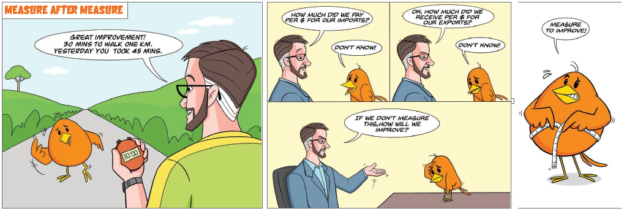
The very first thing that you, as an importer or exporter, have to do is to start tracking and measuring your Net Effective Exchange Rate, because measurement is the first step to improvement. If you do not measure, how can you improve?

We can tell you how to measure or calculate your Net Effective Exchange Rate. Better still, we can work shoulder to shoulder with your team to crunch the numbers and come up with the answers, analysis and comparisons.

Once we have that, we can figure out if there is anything to be done for making your forex risk management performance hit The Sweet Spot.

Interested? Write to us at info@kshitij.com or call us at 00-91-33-24892010.

Measure your Net Effective Rate

#ForexHedging #ImportsExports #ExchangeRate #CurrencyOptions #NetEffectiveExchangeRate #KshitijHedgingMethod