

Issues in Corporate Risk Management - Stick to Objectives; Series on Chart Pattern
Aug, 25, 2004 By Vikram Murarka 0 comments


In this Issue
- Series on Issues in Corporate Risk Management - Part 2 - Stick to Objectives
Issues in Corporate Risk Management
Keep the Objective in mind. It pays
The definition of proper Objectives is the first step in effective Corporate FX Risk Management. Get your objectives wrong and you are most likely courting trouble. We had taken this up in the Issue dated 28-Mar-04. Having set the correct objectives, the Risk Manager needs to keep them in mind after the Hedge Strategy has been implemented, so as to not be led astray by the market. It pays immensely.
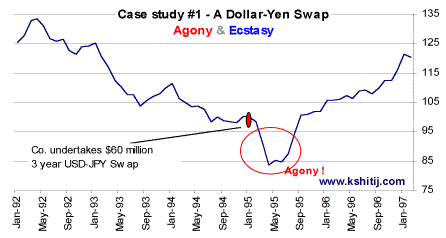
A conglomerate with a Rupee Balance Sheet had a large foreign currency loan book, 85% of which was denominated in US Dollars. The balance was in D-Marks, Yen and Sterling. Circa 1994-95, the Risk Manager decided to reduce the currency concentration risk and rebalance the loan basket using Currency Swaps. The Objective was clearly defined as Risk Diversification.
It was decided to swap 10% of the Dollar loans into Yen. The Yen was chosen because interest rates were close to zero as compared to 6.50-6.75% on the USD 6-month Libor, giving a huge interest benefit. Further, the Yen was expected to weaken over a 3 year time frame. The Swap took place in Jan-95 near 100 on the USDJPY Spot.
Almost immediately thereafter, the Dollar dived against the Yen, to hit an all time low of 79.80 in April 1995. There were 3 months of intense agony. The company had never undertaken such a large forex deal. The Board was on the edge. Had the deal gone horribly wrong? The Risk Manager reminded the Board that the objective was Risk Diversification and only 10% of the loan book had been put on the line. Further, the deal had a 3 year tenor.
The market eventually turned around and the danger passed. The Swap came back into money. Now the Board was tempted to square off the trade and book whatever small profit was available. Again the Risk Manager stuck to his guns, saying the Objective was long term Currency Diversification, not short term Trading Profits. The Board backed down and the Swap was allowed to run its course.
The Yen eventually touched 120 in 1997. The company booked a huge currency and interest rate gain of almost $17 million. Those who have been in the market through that period would appreciate how difficult it must have been to steer such a trade through to its end. It is immensely commendable that the Risk Manager did not waver from the Objective, neither in bad times nor in good times.
The gains from the deal (which in itself was well conceptualized), was realized by remaining focused on the Objective.

You may also like:

In our 10-Dec-25 report (USDJPY 156.70), we expected the USDJPY to trade within 154-158 region till Jan’26 before eventually rising in the long run. In line with our view, the pair limited the downside to … Read More
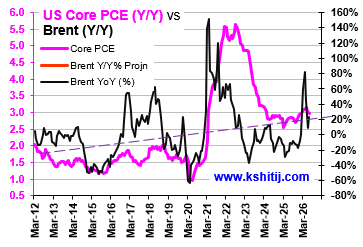
In our last report (04-Sep-26, UST10Y 4.77%) we had noted chances of a slowdown ahead but since Crude could spike up, we retained our view of the US10Yr rising to 5.10% by Nov-26 and 5.40% by Mar-27. As it turns out, Brent did indeed rise to …. Read More
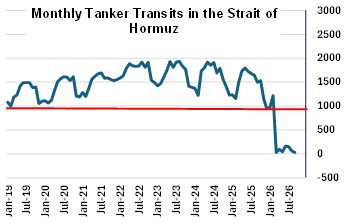
In our September 2026 report (11-Sep-26, Brent @ $103.84), we had expected Brent to range within $90-115 for the next 1year. Prices were expected to remain elevated, primarily driven by the low volume of vessel transit in the Strait of Hormuz. Brent indeed traded within $109.97 and $90.70 in Sep-26, within our expected range. … Read More
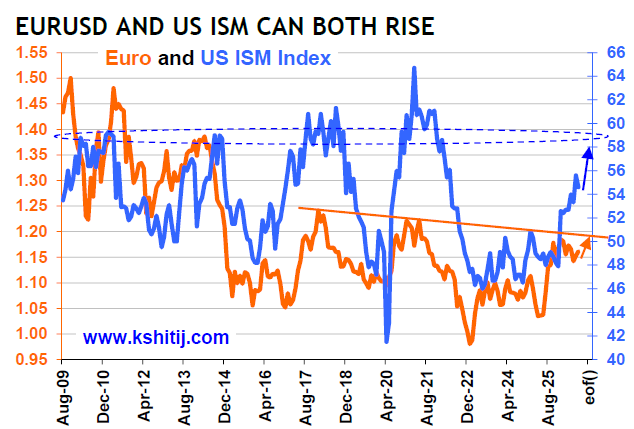
Euro has a positive correlation with US ISM since 2009, except in the period mid-2023 to mid-2025. Positive correlation suggests that while the US ISM rises in the coming months to 58-59, the Euro could rise or remain elevated within …. Read More
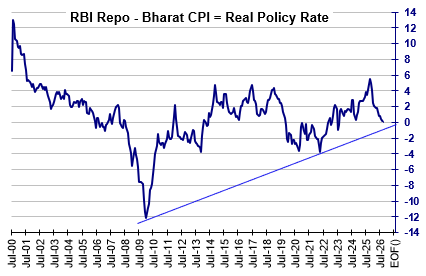
In our 10-Sep-26 report (10Yr GOI 6.98%), we had noted that the Long end of the Curve, viz. the 10Yr GOI was rising due to a number of factors. We said, “Whether the RBI will raise rates on 07-Oct will depend on whether Crude happens to be breaking higher or would have cooled off from $105 to $95” … Read More

Our October ’26 Dollar Rupee Quarterly Forecast is now available. To order a PAID copy, please click here and take a trial of our service.